

Unlock deeper insights on your Antibodies’ performance with our Functional Characterization capabilities
Characterization is a critical step in ensuring the highest quality, efficacy, and safety of your antibodies.
At Lxbio AB we offer a full suite of antibody characterization services designed to assess and profile your antibodies thoroughly.
From early-stage discovery to preclinical, we provide the characterization data needed to advance your development process with confidence – ensuring your antibody meets the required quality standards for therapeutic use and regulatory approval.
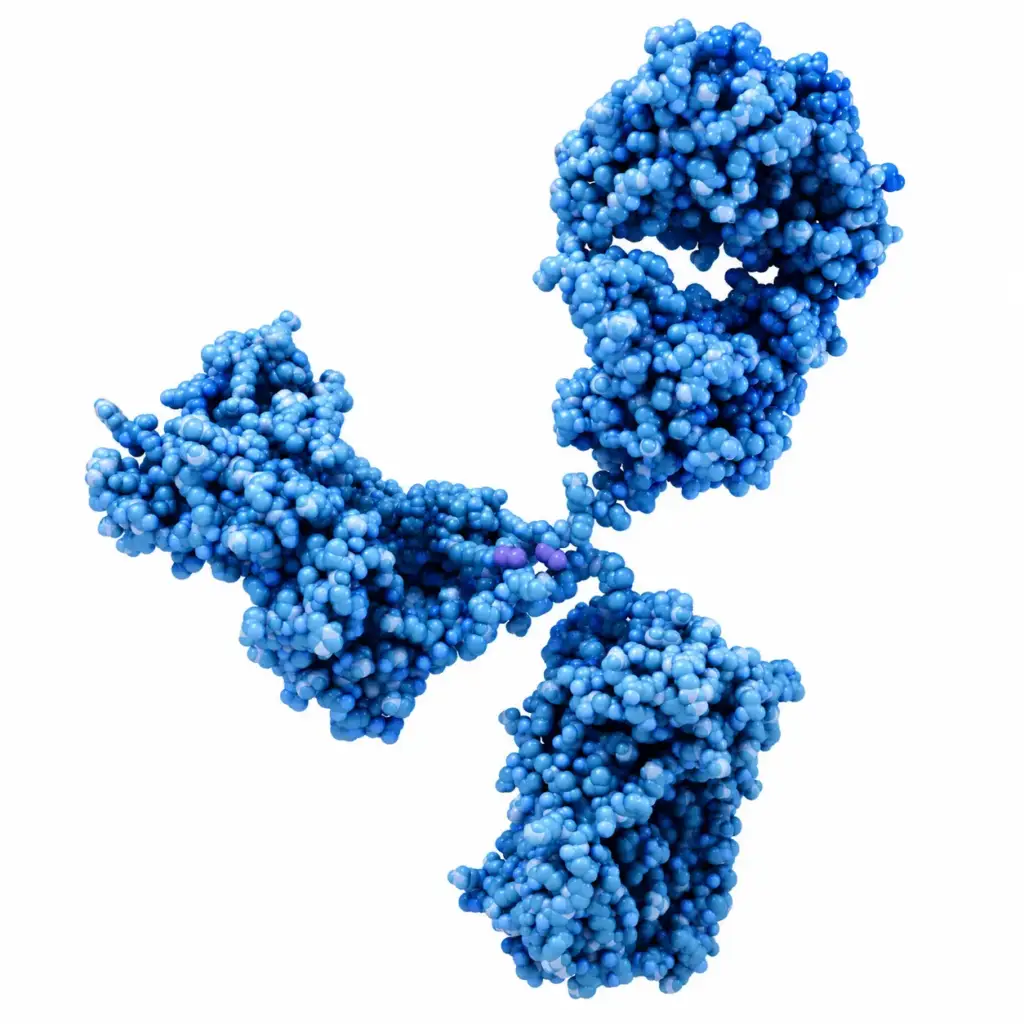
Why Antibody Characterization is Critical?
Ensuring Quality and Consistency:
Thorough characterization ensures that your antibody maintains consistent performance, potency, and quality across different batches. This is critical in clinical trials, where reliable activity is required to demonstrate the antibody’s efficacy and safety.
Regulatory Compliance:
Regulatory agencies, such as the FDA or EMA, require comprehensive characterization data for antibody-based therapeutics. Meeting stringent quality control and safety standards is essential for clinical trial approval and market authorization.
Binding Affinity and Specificity:
Understanding your antibody’s affinity for its target and its specificity is fundamental to optimize its therapeutic potential. Cross-reactivity with non-target proteins can lead to undesired effects and potential toxicity, making these factors crucial to monitor.
Determining Mechanism of Action:
Antibodies can exert their effects through a variety of mechanisms, such as neutralization, antibody-dependent cellular cytotoxicity (ADCC), or complement-dependent cytotoxicity (CDC). Characterizing these effector functions is essential to understand how your antibody will work in vivo and to ensure it can effectively trigger the desired immune response.
Optimizing Drug Development:
Detailed characterization helps identify potential bottlenecks in the drug development process, whether related to formulation, efficacy, or immunogenicity. Early detection of these issues can save time and reduce costs during development.
Characterization services
At Lxbio AB, we offer tailored early-stage and late-stage antibody characterization services, aligning with the unique goals and regulatory requirements at each step of development.
| Feature | Early-Stage Characterization | Late-Stage Characterization |
|---|---|---|
| Goal | Lead selection & developability assessment | Regulatory compliance & clinical readiness |
| Focus | Affinity, stability, liability detection | Structural integrity, potency, safety |
| Typical Technologies | SPR, SEC, DSC, DLS, in silico | MS, ADCC/CDC assays, PK, stability studies |
| Output | Go/no-go decision data | Regulatory compliance data package |

Early-Stage
To assess critical insights in an antibody panel developability, we start by identifying “development red flags” to help you make informed decisions as early as needed. To do that, we offer a wide range of characterization services
Binding Affinity and Specificity
Surface Plasmon Resonance (SPR) to measure KD, kon, and koff.
Epitope binning studies to determine epitope regions and eliminate redundant molecules.
Epitope Mapping
Linear or conformational epitope identification to ensure selectivity.
Developability Assessment
In silico and in vitro screenings for aggregation propensity, solubility and chemical liabilities (e.g., deamidation sites).
Cell killing
Measure the antibody’s ability to induce target cell death. Utilizing advanced detection methods such as flow cytometry, luminescence, or colorimetric readouts, these assays provide precise, reproducible data essential for evaluating therapeutic efficacy.
Internalization
Utilizing advanced detection techniques like fluorescence microscopy, flow cytometry, or high-content imaging, internalization assays provide quantitative and qualitative insights into receptor-mediated endocytosis, trafficking pathways, and the intracellular fate of antibody.
Degranulation
Measure the release of cytotoxic granules from immune cells, such as natural killer (NK) cells or cytotoxic T cells, upon target recognition by the antibody. This process is crucial for evaluating immune cell activation by the target antibody. By assessing degranulation markers like CD107a using techniques such as flow cytometry, these assays provide valuable insights into antibody-mediated immune responses.
T Cell activation
Precise analysis of immune responses, including cytokine profiling, proliferation assays, and activation marker evaluation.
Thermal and Physical Stability
Measurement of intrinsic fluorescence of molecules to assess thermal stability. Dynamic Ligh Scattering (DLS) analysis to assess the size of particles in solution, and Static Light Scattering (SLS) analysis to monitor smaller aggregates and determine the molecular weight of your molecules.
Late-Stage
Our late-stage Characterization capabilities are tailored to ensure the robustness, safety, and efficacy of your antibody candidates as they progress towards clinical stages. We help you understand pCQAs confirming stability, consistency, and manufacturability under regulatory-compliant conditions.
Detailed Structural Characterization
Mass spectrometry (MS) for intact mass, peptide mapping and pos-translational modification analysis.
Effector Function Testing
ADCC, CDC, and ADCP assays using relevant cell lines and Fc receptor profiling.
Extended Stability Studies
Long-term and accelerated stability studies under ICH guidelines. Freeze-thaw robustness and formulation compatibility.
Aggregation and Degradation Studies
Stress testing (pH, temperature, light) to define degradation pathways and support shelf-life claims.
Formulation Optimization Support
Guiding buffer selection and excipient compatibility for long-term stability.